Inclusive Design is a design methodology that creates products and experiences which are accessible, usable, and inclusive for everyone no matter the abilities, ages, backgrounds, and levels of expertise. This methodology ensures that everyone regardless of their physical, sensory, cognitive, or social characteristics, can engage with a solution.
Inclusive design is important for designers to understand because it enhances the user experience for everyone. Everyone benefits from the design which brings great satisfaction and user engagement from all parties. It serves a broader audience, so there is better opportunity to monetize, if possible. It also fosters empathy and understanding for people facing a disability. Inclusive design improves the brand’s reputation by having a good image among all customers. By fostering creativity and engagement, inclusive design is essential to create products and experiences that are accessible, usable, and meaningful for all users, regardless of their abilities or backgrounds.
Empathy exercises help designers gain a deeper understanding of the needs, preferences, and challenges of their users. By putting themselves in the shoes of the users, designers can develop empathy for their experiences and perspectives, leading to better design solutions.
Get Oriented | Computer Trust
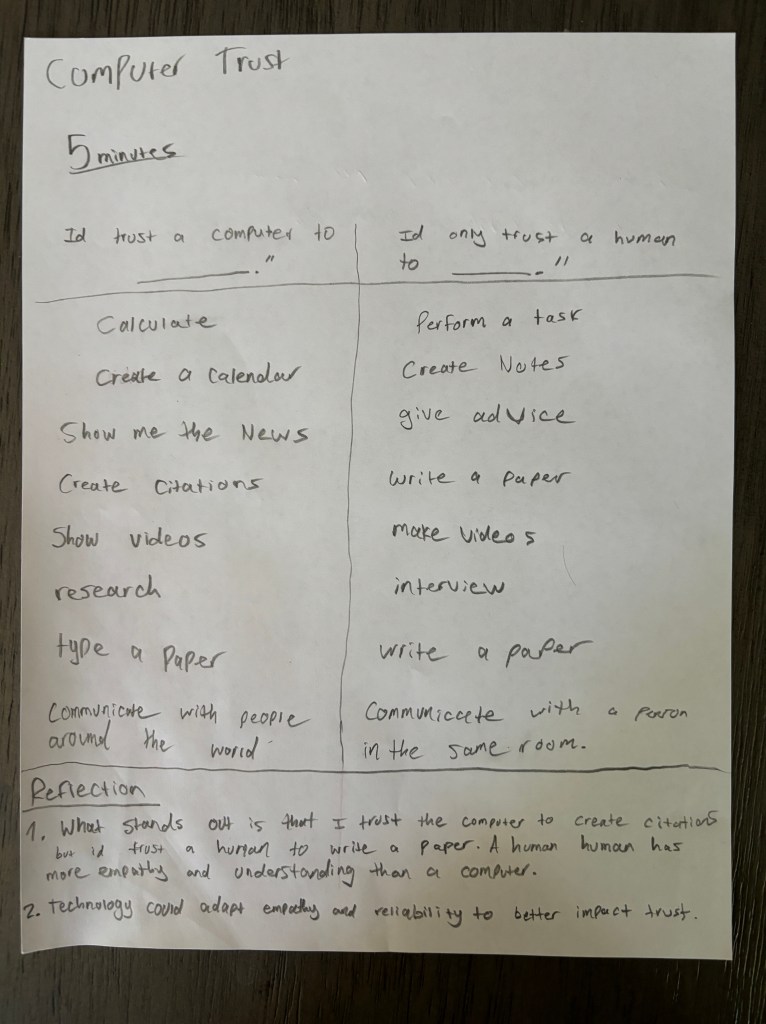
The purpose of this exercise is to unearth why humans trust and mistrust
interactions with technology.
For the exercise I had to fill in the blanks to the terms: “I’d trust a computer to fill in ‘blank’, but I’d only trust a human to fill in ‘blank.’ The catch was to think of words in under 5 minutes and then reflect about the words I chose. This exercise can be helpful when brainstorming ways a design can help the user compared to a human. So I have learned to use this process when starting out and brainstorming for a design and its inclusivity.
Frame | Persona Network
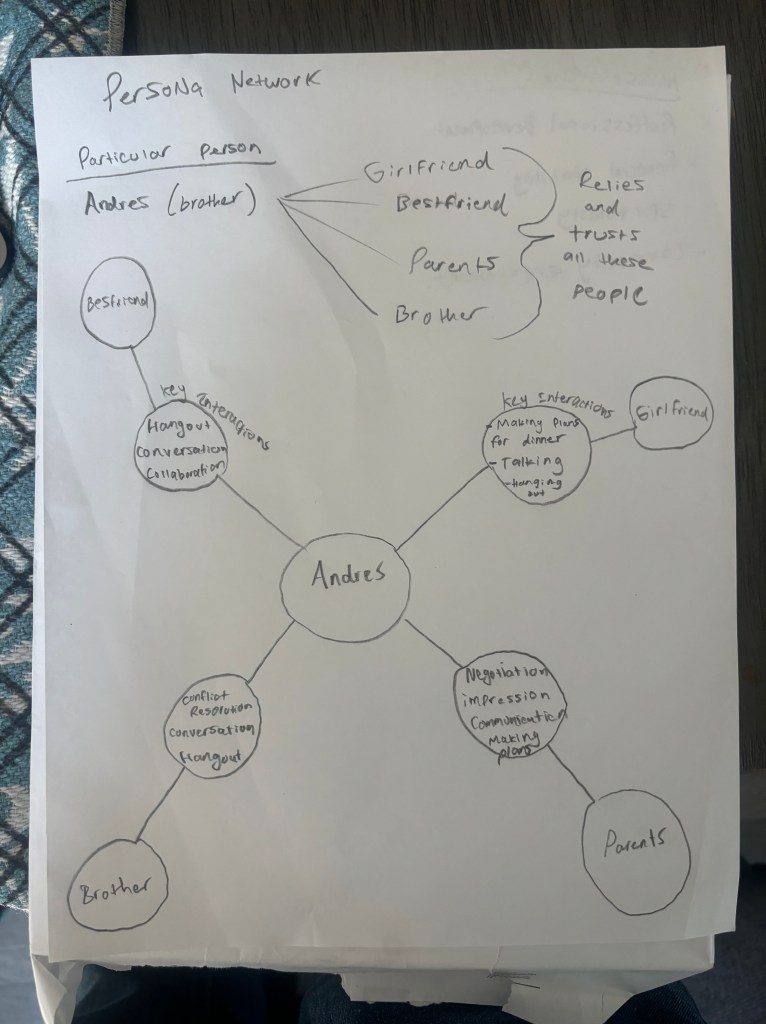
The purpose of this exercise is to consider design challenges in terms of someone’s
personal ecosystem.
At first I had a hard time thinking about a person with difficulties in their environment, so I focused on my brother since he struggles with anxiety. I made a list of all the people he interacts with and created a concept map of the key interactions with each person. With his anxiety, he had mismatches when communicating with parents and brother. However, he felt very comfortable with friends and girlfriend. Using a concept like this can be helpful for me when considering mismatched interactions for my future designs, and seeing how certain qualities in people can make it more comforting when incorporated into a design.
Ideate | Mismatch to Solution
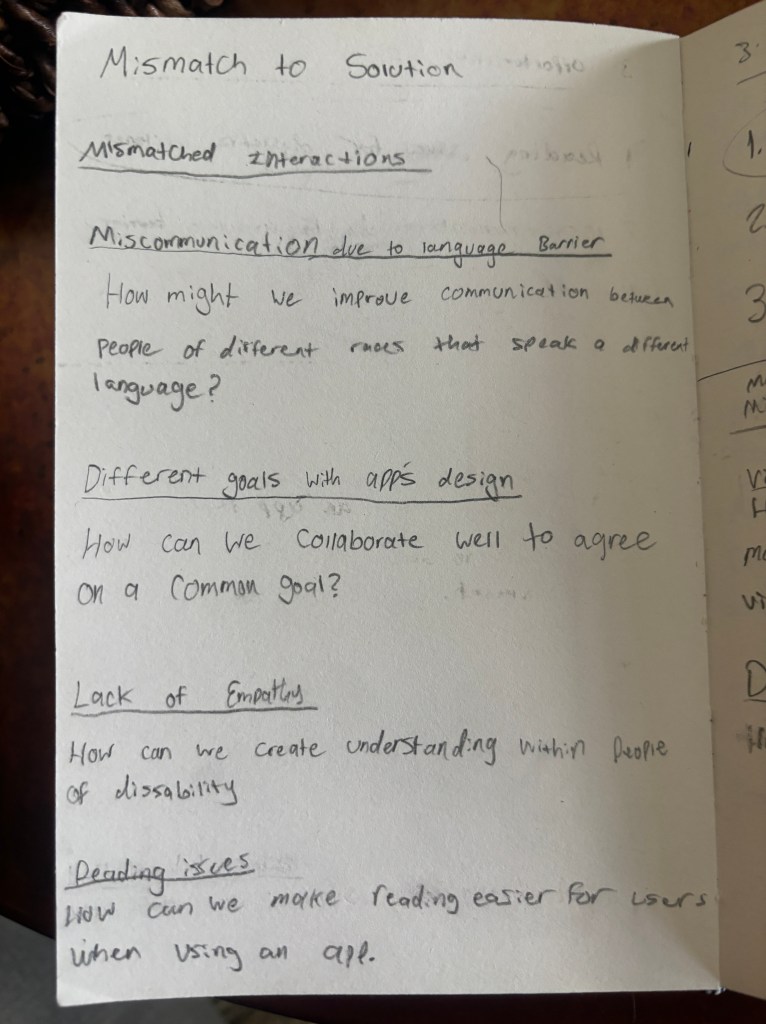
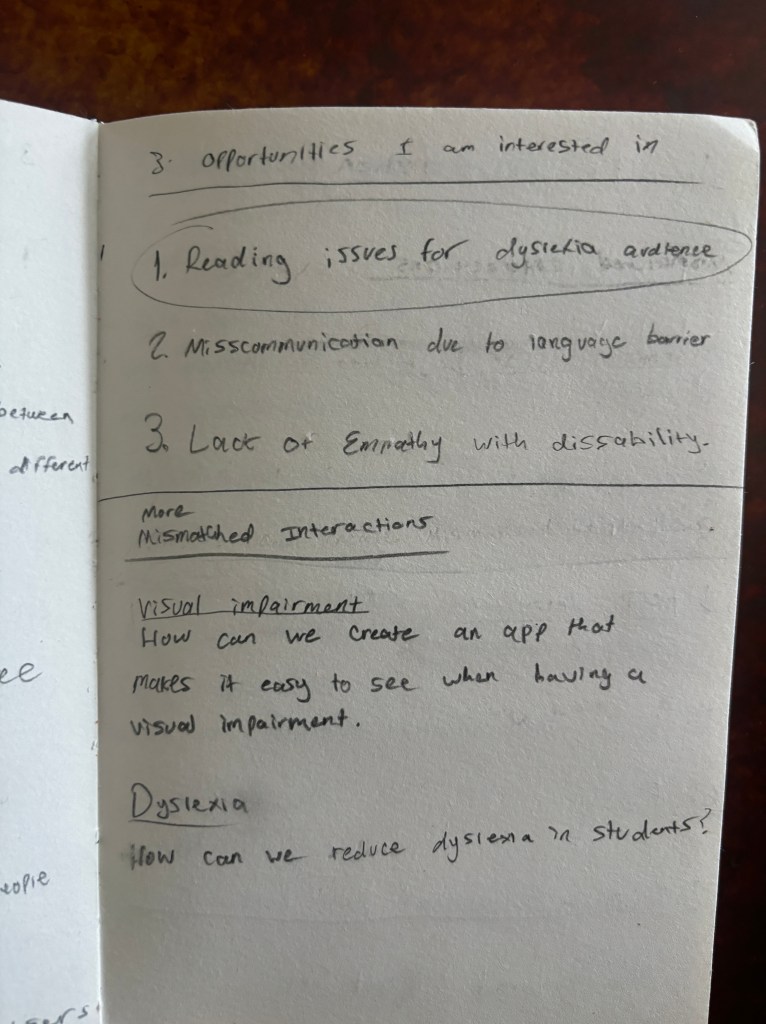
The purpose of this exercise was to brainstorm opportunities for an improved product or experience, based on mismatched interactions.
I listed mismatched interactions I could think of and produced a question for each topic. Then I had to list my top choices. I ended up choosing reading difficulties and dyslexia mismatched interactions to consider for a design solution. Brainstorming mismatched interactions was a helpful activity to come up with ideas to tackle these problems directly.
Iterate | Simulations
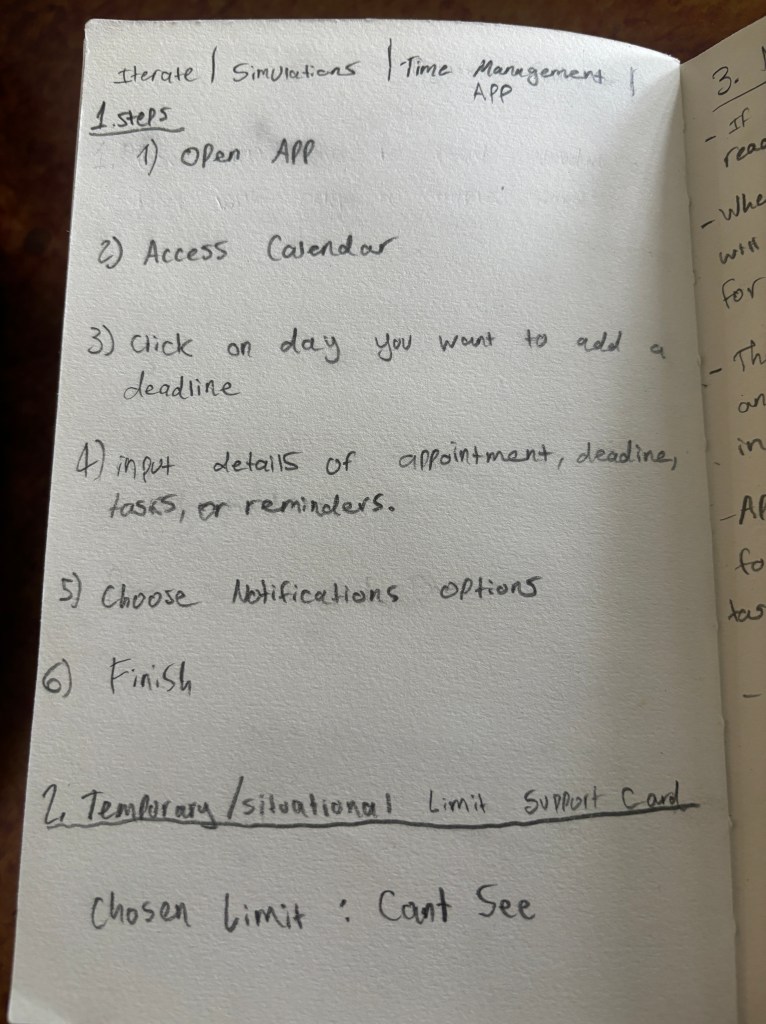
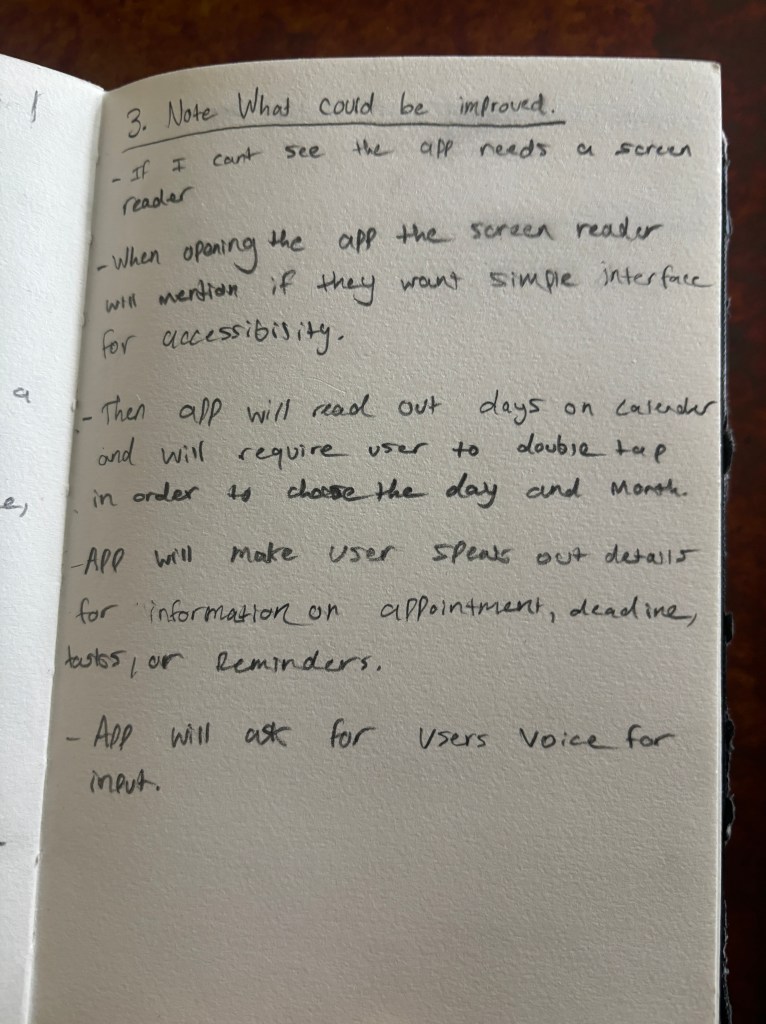
The purpose was to reveal opportunities for improving your solution by simulating temporary and situational limitations.
For this exercise, I created steps for a conceptual calendar app that helps with time management and scheduling for dyslexic people. The assignment then made me choose a situational limit card which was that the person can’t see. I then went through the steps again and noted what could be improved. I noted that adding a text to speech function would solve this issue as well as simplifying the User Interface. That way it is more inclusive for people facing situational limits. This can be useful for future designs because it refines the design to cater to a larger audience, expressing empathy and inclusivity for all.
Optimize | Situational Adaptation
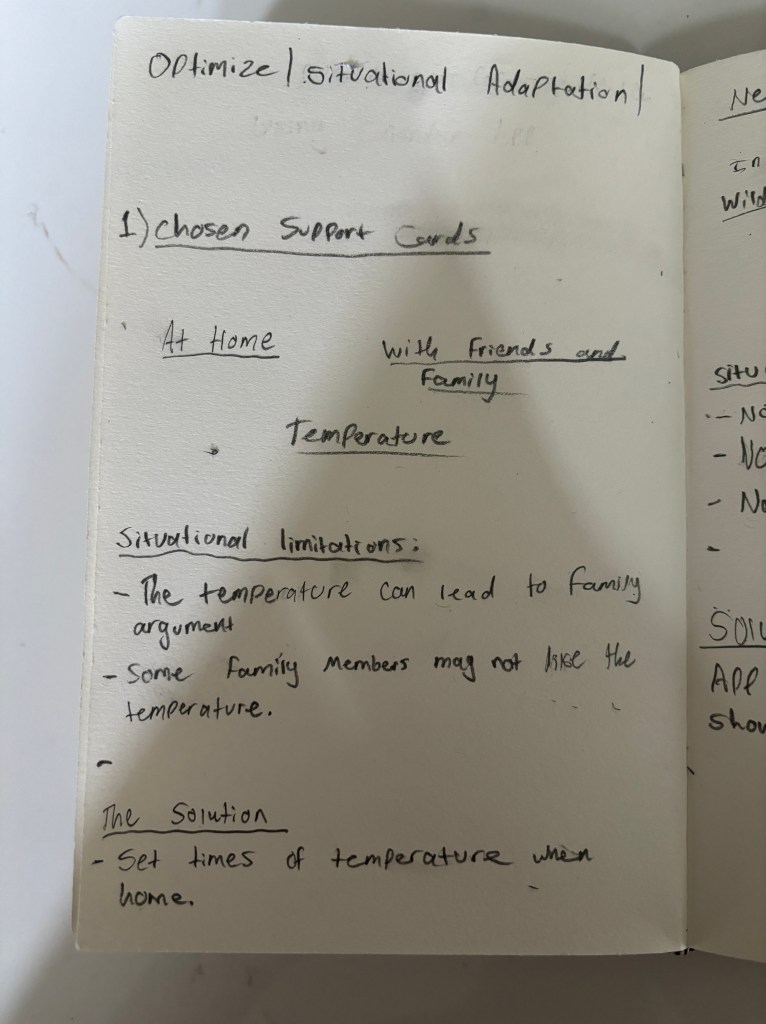
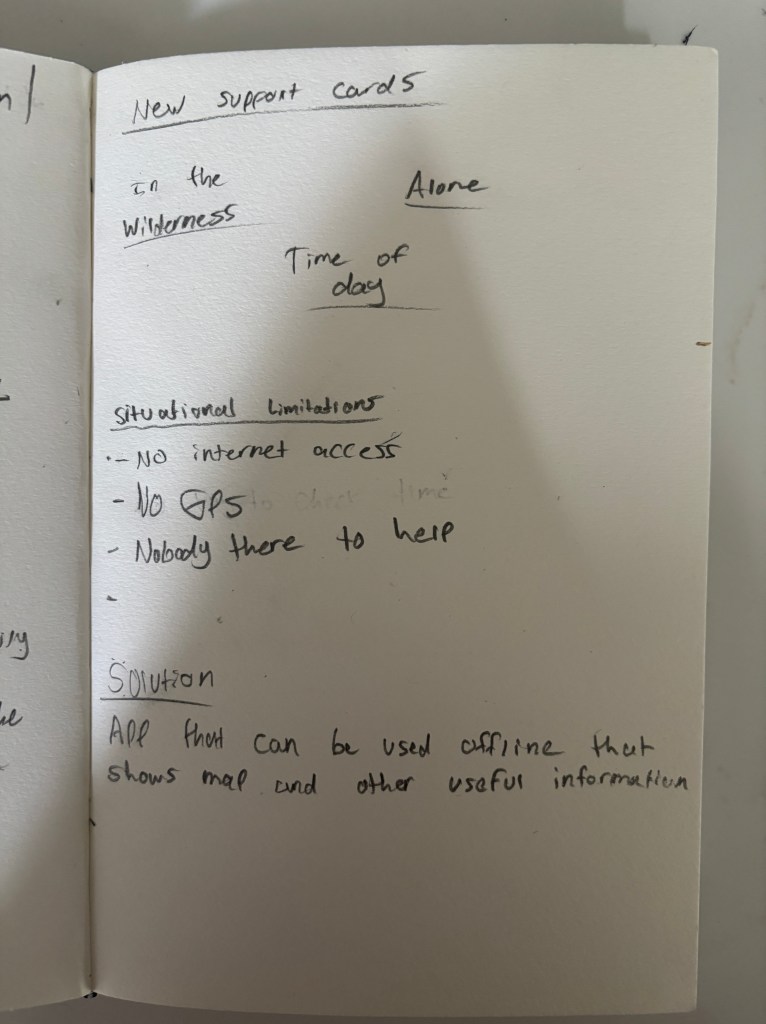
The purpose was to discover ways to adapt your solution to work for a variety of situational limitations
This exercise helped me come up with different situational limitations based on environmental factors. I first chose to do at home, with family and friends with temperature. This created interactions where the temperature would bother some of the family members and cause argument. The solution I proposed was to have certain times where the temperature would change for a certain family member.
I chose new support cards, and this time ended up with being alone in the wilderness with a time of day being daytime. I found at the limitations for these would consist of little to know internet access or way to ask for help if the user is lost. The solution would be to develop an app that works offline to show map details and other important information.
This exercise helped me create a situation for the user and find out ways the limitations occur. Once I know the limitation, I can redesign my project to be accessible so there is no exclusion.
Biggest Takeaway
Inclusive design is very important to consider because it puts everyone first and limits exclusion of certain groups of people. I learned that with these exercises, I can cater my designs to everyone’s needs so that no one is excluded. By looking at disabilities, environmental factors, and challenges people face daily, I can make my designs more accessible for everyone.
 Alberto Flores Portfolio
Leave a comment